Material Comparison
Silica Fume vs Fused Silica: Key Differences Buyers Should Know
Compare silica fume and fused silica by production process, purity, particle size, applications, and cost to make informed sourcing decisions.
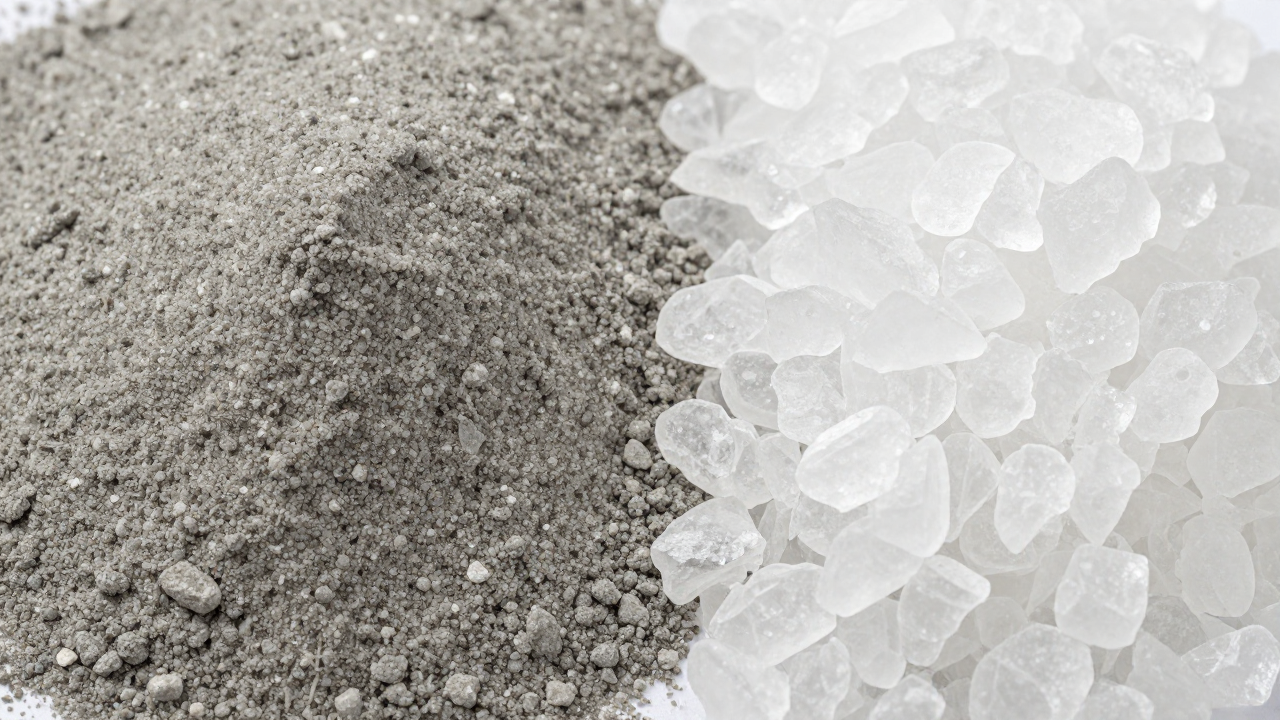
## Overview
Silica fume and fused silica are both high-SiO₂ materials, but they differ significantly in production process, particle size, purity, applications, and cost. Confusing the two can lead to incorrect material orders and failed performance in the target application.
This guide provides a side-by-side comparison to help buyers identify which material fits their needs before contacting suppliers.
## Production process
**Silica fume** is a byproduct of silicon metal or ferrosilicon alloy production. During smelting, SiO gas oxidizes in the furnace exhaust and condenses into ultrafine spherical particles that are collected in baghouse filters.
**Fused silica** is produced by melting high-purity quartz crystal at temperatures above 1,700°C, then rapidly cooling (quenching) the melt to form an amorphous glass. The resulting material is then crushed, ground, and classified into specific particle size grades.
The key difference: silica fume is a recovered byproduct, while fused silica is a manufactured product from raw quartz.
## Property comparison
| Property | Silica Fume | Fused Silica |
|----------|-------------|--------------|
| SiO₂ content | 85%–98% | ≥ 99% |
| Average particle size | 0.1–0.5 μm | 0.1–100 μm (grade-dependent) |
| Particle shape | Spherical | Angular (crushed) |
| Bulk density | 200–700 kg/m³ | 600–1,500 kg/m³ |
| Specific surface area | 15–30 m²/g | 0.5–5 m²/g |
| Production method | Furnace byproduct | Melted and crushed quartz |
| Cost per ton | Lower | Higher |
## Application differences
### Silica fume applications
- **High-performance concrete**: Pozzolanic additive for bridges, marine structures, and high-rise buildings
- **Refractory castables**: Binder and performance enhancer for kiln linings
- **Oil well cementing**: Thermal stability and corrosion resistance
- **Rubber and polymer fillers**: Mechanical reinforcement
### Fused silica applications
- **Solar crucibles**: Raw material for quartz crucibles in PV silicon wafer production
- **Precision casting**: Shell mold facing slurry for investment casting
- **Semiconductor and optics**: High-purity components, lenses, and windows
- **Refractories and ceramics**: Thermal shock-resistant components
- **Epoxies and coatings**: Filler with low thermal expansion
## Cost considerations
Silica fume is generally less expensive per ton than fused silica because it is a byproduct of existing silicon metal production. However, the lower bulk density of undensified silica fume increases per-ton shipping costs.
Fused silica commands a higher price due to the energy-intensive melting process and higher purity requirements. Within fused silica, prices vary significantly by purity grade (standard vs. high-purity) and particle size distribution.
## How to choose
1. **Need a pozzolanic additive for concrete or refractory?** → Silica fume
2. **Need a high-purity filler or crucible raw material?** → Fused silica
3. **Budget-sensitive application with moderate purity needs?** → Silica fume
4. **Application requires very low iron content (< 0.01%)?** → Fused silica
5. **Investment casting binder?** → Depends on facing vs. backup layer — fused silica for facing, either for backup
## What buyers should clarify
Before inquiry, specify the target application, required SiO₂ minimum, acceptable particle size range, and monthly volume. If uncertain which material suits the application, describe the end use and ask the supplier to recommend the appropriate grade.
## Why it matters
Selecting the wrong material leads to performance failures, wasted procurement costs, and project delays. Understanding these differences before inquiry reduces back-and-forth and leads to more productive supplier conversations.